Father and Child Silhouette SVG Bundle
A Quiet Moment, Cleanly Captured — First Impressions That Matter
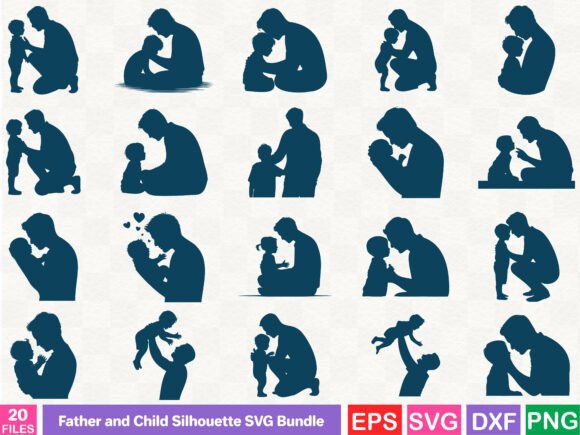
Opening the Father and Child Silhouette SVG Bundle feels like flipping to a well-composed page in a visual journal: no clutter, no forced sentiment—just two figures, gently nested, with clear negative space and balanced proportions. As an embroidery designer who’s stitched hundreds of family-themed pieces for boutiques and Etsy sellers, I immediately notice how this design avoids over-detailing. There’s no facial expression to misinterpret, no fussy clothing lines to distort under stitch tension. That simplicity isn’t minimalism for its own sake—it’s functional restraint. It reads clearly at 3.5 inches wide on a baby onesie and holds presence at 6 inches across a linen tote bag. The silhouette theme leans into warmth and timelessness, not trendiness—exactly what makes it work for nursery decor, Father’s Day gifts, or even subtle branding on a small shop’s apron line.
Where It Shines (and Where It Needs Thought)
I recently tested the Father and Child Silhouette SVG Bundle on a custom embroidered cotton-linen blend tea towel for a local kitchen boutique. The result? Crisp, confident, and instantly legible—no ghosting, no thread pull-through. That’s because the shapes are generously rounded, with smooth curves and open interior spacing. No tight corners or micro-details that collapse under satin stitch or fill stitch density. On sweatshirts and unstructured totes, it anchors beautifully without overwhelming the garment’s texture. For baby embroidery—think organic cotton bodysuits or muslin swaddles—the design scales down cleanly, especially when converted to a low-density machine embroidery design with adjusted underlay.
But here’s where real-world judgment kicks in: this isn’t a one-size-fits-all embroidery file. On stretchy fabrics like jersey tees, I recommend using a cutaway stabilizer *and* reducing stitch density slightly—especially around the shared shoulder curve—where tension can cause subtle distortion. On dark fabric, avoid light thread unless you’re pairing it with a tear-away backing that won’t shadow. And for curved surfaces—caps or beanies—test the layout in your hoop first; the silhouette’s clean base works well, but avoid placing the topmost curve right at the crown seam where puckering risk increases.
Real Use, Real Impact: From Mockup to Market
Last month, a fellow Etsy seller asked me to review her holiday gift listing: personalized embroidered pillow covers featuring father-child themes. She’d chosen the Father and Child Silhouette SVG Bundle as her lead design—and rightly so. In her printable mockups, it held up across light oat, charcoal grey, and navy backgrounds. Customers responded strongly to its quiet sincerity—not “cute,” not “corporate,” but emotionally grounded. That tone translates directly to perceived value: handmade product buyers don’t just buy stitching; they buy intention. This design signals care, not cliché.
For craft business owners, that matters. When you use the Father and Child Silhouette SVG Bundle on a batch of linen aprons for a dad-owned coffee roastery, it reads as cohesive brand storytelling—not generic clip art. Same goes for embroidered patches sold as standalone keepsakes: the clean outline allows easy applique application, and the lack of internal detail means fewer thread breaks during high-volume runs.
Design Notes Every Embroiderer Should Check Before Stitching
- Test first—always run a sample on scrap fabric matching your final substrate, especially for textured or blended weaves.
- Review stitch density—if converting from SVG to embroidery file, watch for dense fill areas near connecting limbs; adjust underlay and reduce density by 5–10% on medium-weight knits.
- Confirm hoop size compatibility—the composition fits comfortably in a 4x4 hoop at standard scale, but double-check before digitizing for smaller hoops (e.g., 3x3 for baby caps).
- Inspect small details—though minimal, the gap between figures should remain open after stitching; if threads bridge it unintentionally, tweak jump stitch settings.
- Compare contrast—run black-and-white mockups to verify legibility on both light and dark fabric backgrounds.
- Stabilizer choice matters—use cutaway for knits, tear-away for stable wovens, and consider topping for terrycloth or looped tea towels.
- Licensing clarity is non-negotiable—since this falls under Illustrations and Graphics, verify whether commercial embroidery rights are included before selling finished products or digital embroidery files.
Final Thought: A Design That Supports Your Craft, Not Competes With It
The Father and Child Silhouette SVG Bundle doesn’t shout. It doesn’t need to. Its strength lies in how quietly it serves your intent—whether you’re stitching a heartfelt gift, building a consistent line of small shop products, or creating digital embroidery assets for other makers. It leaves room for your voice: your thread palette, your fabric choice, your brand’s quiet confidence. In an era where customers scroll past noise, this kind of thoughtful restraint is rare—and valuable. Use it with intention, test it with care, and let the simplicity speak for itself.