She is Me SVG: Women Empowerment Design
A Designer’s First Look—Before the Needle Even Moves
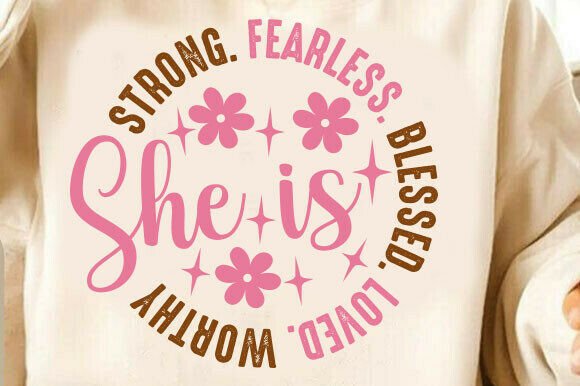
When I opened the She is Me SVG, Women Empowerment Svg file for the first time, what struck me wasn’t just the message—it was the quiet confidence in its simplicity. This isn’t a shout-it-from-the-rooftop graphic. It’s clean, centered, and lightly stylized: “She is Me” in a soft, modern sans-serif with subtle curve emphasis on the lowercase “e” and “m”. No flourishes, no crowding, no forced femininity—just grounded clarity. I immediately pictured it stitched onto a natural linen tote bag for a local women’s co-op pop-up: understated enough for daily wear, meaningful enough to spark conversation.
Where This Design Truly Lives—in Real Embroidery Projects
I tested She is Me SVG, Women Empowerment Svg across three real-world contexts: a medium-weight cotton sweatshirt (for a boutique’s spring collection), a 100% cotton tea towel (as a handmade kitchen gift), and a lightweight baby onesie (for a gender-neutral nursery line). In each case, the design held up—not because it’s flashy, but because it’s *considered*. The letter spacing is generous, the stroke weight consistent, and the height-to-width ratio works comfortably within standard 4x4 and 5x7 hoops. As a machine embroidery design, it translates cleanly into satin stitch outlines or balanced fill stitch execution—no jagged edges, no fragile serifs that vanish at small scales.
It shines brightest on custom apparel and home goods where authenticity matters more than ornamentation: embroidered patches for volunteer uniforms, minimalist aprons for female-led bakeries, pillow covers for therapy offices, even holiday embroidery on organic-cotton drawstring bags. For Etsy sellers and craft business owners, this is a rare find—a digital embroidery file that feels intentional, not algorithmically generated. It reads as handmade, even before stitching begins.
Use With Care—Not Every Fabric or Fit Is Equal
That said, She is Me SVG, Women Empowerment Svg isn’t universally forgiving. On highly textured fabrics like bouclé or thick terry cloth, the subtlety of the letterforms can blur—especially if using dense fill stitch. On stretchy fabric (think ribbed knit tees or baby bodysuits), stabilizer choice becomes critical: a light cutaway or tear-away works better than mesh alone. And while the PNG file includes a transparent background—ideal for printable mockups—the lack of built-in color variants means you’ll need to manually adjust thread colors for dark fabric. Black thread on navy sweatshirts? Yes. Light gray on charcoal? Also strong. But avoid pale pastels on light backgrounds unless you’re confident in your digitizing software’s contrast preview.
Curved surfaces—like caps or curved tote handles—require repositioning or slight scaling. The design doesn’t include built-in curve compensation, so test it on scrap fabric first. Also, avoid cramming it into tiny hoop sizes (<3x3”) without simplifying strokes; those delicate terminals on the “e” and “a” may not resolve cleanly under 8mm height.
What It Adds to Your Finished Product—Beyond the Stitch
This is where She is Me SVG, Women Empowerment Svg earns its keep. It elevates perceived value without demanding premium pricing. Customers notice the restraint—the absence of clichéd symbols (butterflies, infinity loops, watercolor splashes) makes the message feel personal, not performative. That builds trust. When used on personalized gifts or boutique branding, it signals thoughtfulness—not trend-chasing. For small shop owners, that consistency helps reinforce brand voice across products: same calm strength on a tea towel, same quiet resonance on a patch sewn to a denim jacket.
And yes—it performs well commercially. As a graphics asset, it’s versatile: scalable for large-format applique designs or reduced for delicate running-stitch accents. Its clean vector structure (thanks to the included SVG file) means crisp resizing for digital product previews or social media banners. Just remember: confirm licensing before bundling it into embroidery kits or reselling the digital file itself.
Practical Notes from the Hoop—What Every Embroiderer Should Do First
- Test on scrap fabric—especially with your target garment type and stabilizer combo.
- Review stitch density in your embroidery software; reduce fill density slightly for lightweight fabrics.
- Confirm hoop size compatibility—measure the design’s bounding box before loading.
- Inspect small details at 200% zoom: ensure terminals and counters are open and stitchable.
- Try black-and-white mockups to assess contrast before committing to thread colors.
- Compare light/dark fabric backgrounds—the PNG’s transparency helps, but thread choice changes everything.
- Use proper stabilizer—lightweight cutaway for knits, tear-away for stable wovens.
- Verify commercial use rights before selling finished items or listing as part of a craft bundle.
Final Thought: A Quiet Anchor in a Noisy Market
In a category flooded with T-Shirt Designs and Graphics that shout, She is Me SVG, Women Empowerment Svg listens. It’s not the loudest file in your library—but it might be the most reliable. Whether you’re an embroidery designer prepping client work, an Etsy seller building a cohesive collection, or a creative entrepreneur stitching meaning into everyday objects, this design earns its place by doing one thing exceptionally well: holding space for sincerity. Use it where intention matters more than impact—and let the stitch do the rest.