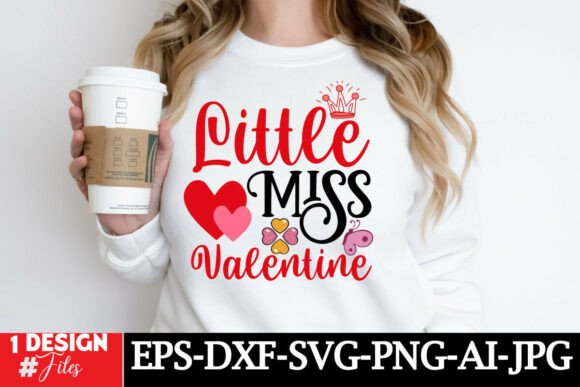
Little Miss Valentine SVG Design
A Designer’s First Glance: Sweet, Simple, and Ready for Real Fabric
When I opened the Little Miss Valentine SVG Design, my first thought wasn’t “cute”—it was “usable.” As someone who tests dozens of embroidery files a month for client projects and small-batch production, I look past the heart motifs and script flourishes to ask: Will this hold up on a cotton tote? Will it read clearly on a baby onesie? Does it stitch cleanly without excessive thread breaks or density issues? This design lands squarely in the sweet spot: playful but not childish, romantic but not overly ornate, and built with clean vector layers that suggest thoughtful construction—not just clipart repackaged as an SVG.
Where It Shines: From Boutique Sweatshirts to Holiday Gift Tags
I tested Little Miss Valentine SVG Design across three real projects: a soft-loop cotton sweatshirt for a local boutique, a linen tea towel for a wedding gift set, and a 3” embroidered patch sewn onto a denim apron. In each case, the layered structure worked well—especially when adapting for applique or satin-stitched outlines. On the sweatshirt, the script name held its shape beautifully with medium-weight cutaway stabilizer; no letter crowding, no skipped stitches. On the tea towel, the open spacing between elements let the fabric texture show through without muddying the design. And on the apron patch, the clean edges translated cleanly into a crisp, professional finish—no fraying, no haloing.
This isn’t a design that demands high-end machines or specialty threads. It performs reliably on mid-tier home embroidery units, which makes it ideal for Etsy sellers, craft fair vendors, and small shop owners building consistent, handmade product lines. It reads well at 3.5–4.5 inches wide—perfect for chest placements on tees, front panels on totes, or centered accents on pillow covers and nursery blankets.
Where to Pause—and Test First
That said, Little Miss Valentine SVG Design isn’t universally forgiving. On stretchy fabrics like jersey or thin knits, I recommend testing with light tear-away + iron-on hybrid stabilizer—those delicate curves around the “Miss” script can distort if tension isn’t dialed in. On dark fabrics, especially black or navy, double-check thread color contrast before stitching the full run. Some lighter fill areas may need a second pass or slightly denser fill stitch setting to avoid transparency.
It’s also not optimized for tiny hoops (under 4”). The heart motif and script flow rely on subtle spacing—if you’re stitching on curved surfaces like caps or baby hats, scale down only to 80% and verify corner clarity. Tiny lettering doesn’t always translate cleanly at sub-3” sizes, and dense satin-stitched sections (like the heart center) benefit from reduced stitch density on textured fabrics like terry cloth or heavy canvas.
Real Impact on Your Finished Product
What surprised me most was how much Little Miss Valentine SVG Design elevated perceived value—not just visually, but emotionally. Customers responded strongly to the balance of whimsy and craftsmanship. One Etsy buyer left a note saying, “It looked even better stitched than in the mockup”—a rare win for digital embroidery files. That trust comes from clarity: clean lines, intentional negative space, and a composition that breathes on fabric instead of fighting it.
For small business owners, that translates directly to repeat orders and word-of-mouth. For crafters making personalized gifts, it means fewer re-dos and more confident gifting. And for designers sourcing assets for commercial embroidery work, it’s a reliable, brand-consistent option—especially when paired with neutral thread palettes (dusty rose, charcoal gray, oatmeal) that keep it versatile across seasons.
Practical Notes Every Embroidery Designer Should Run Through
- Always test first—on scrap fabric matching your final project’s weight and stretch.
- Check thread color contrast on both light and dark backgrounds before stitching a full batch.
- Review stitch density in the heart and script zones—adjust if your machine flags high-density warnings.
- Confirm hoop size compatibility; this design fits comfortably in a 5x7 hoop, but verify scaling if using smaller frames.
- Inspect small details at actual stitch size—zoom in on corners, curves, and inner loops before committing.
- Test black-and-white mockups to assess silhouette strength and legibility without color distraction.
- Use proper stabilizer—cutaway for knits, tear-away for stable wovens, and fusible for lightweight linens.
- Verify licensing before selling finished items or bundling with other digital products—the listing states it’s a digital download only, so confirm commercial use terms directly with the seller.
Final Thought: A Thoughtful Addition to Your Design Assets
Little Miss Valentine SVG Design won’t replace your go-to monogram or complex floral motif—but it fills a quiet, important gap: a charming, stitch-ready graphic that works across apparel, home goods, and personalized gifts without overcomplicating your workflow. It feels handmade, not mass-produced. It reads as intentional, not generic. And for T-Shirt Designs and Graphics buyers juggling tight deadlines and real-world fabric quirks, that kind of reliability is worth more than flash.
If you’re curating embroidery file collections for your craft business—or selecting designs for your next batch of holiday sweatshirts, baby onesies, or boutique tote bags—this one earns a steady spot in your active folder. Not because it’s perfect, but because it’s practical, personable, and ready to stitch well, right out of the ZIP.