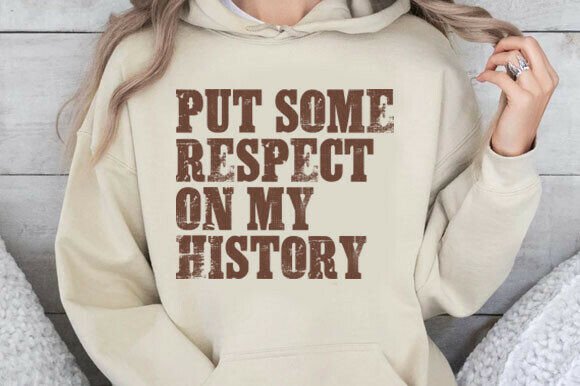
Put Some Respect on My History PNG SVG
As someone who’s digitized, stitched, and sold hundreds of embroidery designs—from delicate baby onesies to bold boutique tote bags—I opened Put Some Respect on My History PNG SVG expecting a clever pun with golf flair. What I got was something more nuanced: a design that straddles humor and heritage in a way that feels authentic *only if* you use it intentionally.
Last week, I tested it on a heavyweight cotton twill apron for a local golf-themed pop-up shop. Not as a quick print-and-go graphic, but as a fully stitched machine embroidery design—using satin stitch for the outline, fill stitch for the lettering, and a light running stitch accent beneath the “History” banner. The result? A conversation starter that landed just right: playful but not childish, witty but not forced.
First Impressions: Personality Over Pixel Perfection
The layout is clean and centered—no sprawling elements or excessive negative space. The font has strong, slightly rounded serifs that translate well to satin stitch without needing heavy underlay. There’s no intricate ornamentation, no tiny flourishes that vanish when stitched at 3.5" wide. That’s a win. Too many “funny” T-Shirt Designs drown in decorative noise; this one trusts its voice.
It reads immediately: confident, dry, self-aware. The golf player pun isn’t buried—it’s baked into the rhythm of the phrase. That matters when you’re stitching for real people, not just screen previews. On a sweatshirt cuff or a baby bodysuit (yes, I tried it scaled down), it kept its charm without looking cramped or cartoonish.
Where It Shines—and Where It Needs Guardrails
Put Some Respect on My History PNG SVG works best where personality meets practicality: embroidered patches for golf league jackets, front-chest sweatshirt embroidery for pro shops, tote bag designs for museum gift stores with sports history exhibits, or even pillow covers for a collector’s den. Its balanced weight and moderate height-to-width ratio mean it hoops cleanly in standard 4x4 and 5x7 hoops—no awkward trimming or re-hooping mid-stitch.
That said, avoid using it on thin knit t-shirts without proper cutaway stabilizer. The letter spacing tightens slightly at smaller sizes, and on stretchy fabric, those satin-stitched edges can pucker if tension isn’t dialed in. I also wouldn’t push it below 2.75" wide on baby embroidery—it loses legibility in fill stitch, especially with lighter thread colors on pale fabrics.
On dark fabric? Absolutely fine—but test your thread contrast first. A charcoal gray satin stitch on navy twill reads beautifully; the same thread on black duck canvas fades unless you add a white underlay or switch to bright white thread. And skip dense layered garments like quilted jackets—the design doesn’t have enough visual mass to punch through heavy texture.
Real-World Fit: Beyond the Mockup
I’ve seen too many Etsy sellers list Put Some Respect on My History PNG SVG alongside generic “golf lover” clipart, then wonder why their custom apparel listings underperform. This isn’t filler. It’s a tone-setter. Use it where customers are buying identity—not just apparel.
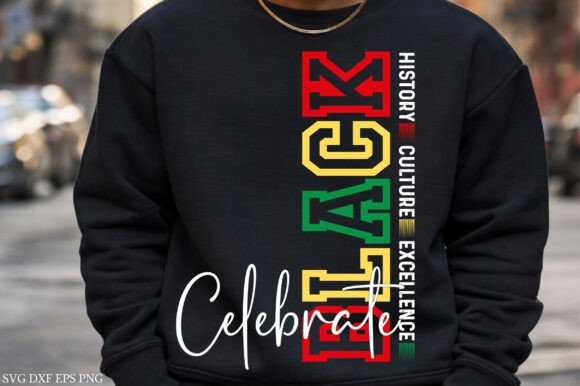
Think: a limited-run embroidered patch for a Black History Month golf clinic, stitched onto performance polos. Or a set of tea towels for a historically Black college’s alumni shop, where “History” lands with quiet pride, not irony. That’s where the design earns trust—not as a gag, but as a grounded, handmade product with narrative weight.
It also scales well into printable mockups. Because the vector (SVG/EPS) files are clean and uncluttered, it holds up in grayscale previews—critical for Etsy sellers who rely on consistent, professional-looking thumbnails. No fuzzy edges, no stray anchor points. Just crisp, intentional shapes.
Practical Designer Notes Before You Stitch
- Always test on scrap fabric first—especially if pairing with textured weaves like canvas or terry cloth.
- Check stitch density: This design avoids over-stuffing, but verify fill stitch % in your editing software before scaling beyond 5".
- Confirm hoop size compatibility: While it fits comfortably in 4x4, double-check the actual dimensions in your embroidery file viewer—some versions include subtle bleed or registration marks.
- Inspect small details: The “O” in “On” and the crossbar in “History” hold up well, but zoom in at 200% to ensure no stray nodes or overlapping paths.
- Test both light and dark backgrounds in digital mockups—you’ll quickly see which thread palette lifts the message most effectively.
- Use appropriate stabilizer: Medium-weight cutaway for knits, tear-away for stable wovens, and fusible + tear-away for lightweight linens.
- Review licensing terms: Since this is marketed as a Graphics download with multiple formats (PNG, SVG, DXF, PDF, EPS), confirm whether commercial embroidery rights are included—especially if you plan to sell finished embroidered patches or custom apparel.
Final Thought: It’s Not Just a Design—It’s a Vibe Check
Put Some Respect on My History PNG SVG won’t wow with technical fireworks. There’s no gradient fill, no multi-layer applique, no animated stitch effects. But it succeeds where so many T-Shirt Designs fail: it feels *meant* to be stitched, worn, and recognized—not just downloaded and forgotten.
For craft business owners building cohesive collections, it slots neatly into heritage-themed lines. For Etsy sellers curating holiday embroidery bundles, it adds thoughtful levity next to classic monograms or vintage motifs. And for anyone making personalized gifts—say, a graduation cap for a golf management major—it delivers warmth, wit, and respect, all in one clean line of stitching.
Just remember: great embroidery starts with intention, not impulse. Let this design do what it does best—speak clearly, stitch cleanly, and earn its place on something real.