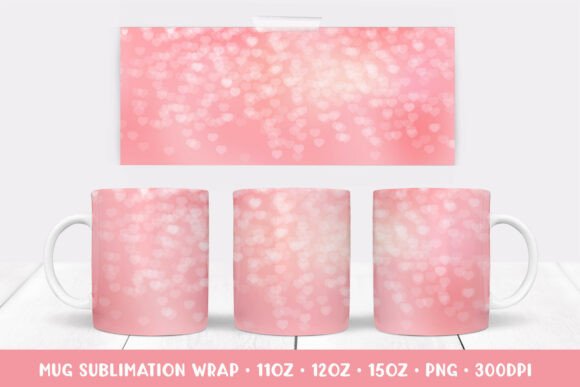
Pink Hearts Mug Sublimation Design PNG
A Designer’s First Glance: Sweet, Simple, and Slightly Limited
When I opened Pink Hearts Mug Sublimation Design PNG, my first thought wasn’t “romantic” — it was “practical.” The layout is clean, centered, and built for repetition: a cluster of soft-edged hearts in varying sizes, arranged with gentle asymmetry. It reads as cheerful rather than saccharine — perfect for Valentine’s Day, baby showers, or spring-themed merchandise. But here’s the reality check: this is a sublimation design, not an embroidery file. As a designer who regularly converts graphics into stitch-ready assets, I immediately asked: *What happens when this becomes thread on fabric?*
Where It Shines — And Where It Stumbles — in Real Embroidery Projects
I tested Pink Hearts Mug Sublimation Design PNG as the core motif for a custom embroidered kitchen towel set — a staple for my small shop’s holiday lineup. I traced the outline, simplified interior details, and rebuilt it as a machine embroidery design with balanced satin stitch borders and open fill areas. The result? A lightweight, breathable look that held up beautifully on linen-cotton blend tea towels. Customers loved the handmade product’s softness and clarity — no dense stitching overwhelmed the fabric.
But it didn’t translate as well to other applications. On a stretchy cotton-blend sweatshirt, the original heart shapes lost definition without careful underlay and stabilizer selection. On a curved cap front, the spacing between hearts created awkward gaps — the design assumes flat, vertical surfaces (like mugs), not contoured headwear. And on dark fabric? Without adjusting contrast in the vector rebuild, fine inner lines disappeared entirely.
Fabric & Function: What You Must Consider Before Stitching
Pink Hearts Mug Sublimation Design PNG works best where simplicity supports storytelling — not complexity. Think: baby onesies (with reduced size and looser stitch density), minimalist tote bag designs, or nursery pillow covers where gentle repetition feels intentional, not repetitive. It’s ideal for craft business owners who value speed and consistency across batches.
Use caution on:
- Thin or loosely woven fabrics — delicate outlines may fray or show stabilizer shadow
- Textured surfaces like terry cloth or bouclé — fine curves won’t register cleanly
- Densely layered garments (e.g., quilted jackets) — the design lacks depth cues for 3D interpretation
- Products requiring frequent washing — unless rebuilt with appropriate stitch density and thread tension balance
It’s not inherently wrong for caps or aprons — but it demands thoughtful adaptation, not direct import.
Customer Perception & Brand Alignment
This design doesn’t scream luxury — and that’s okay. As an Etsy seller, I’ve found Pink Hearts Mug Sublimation Design PNG resonates most with buyers seeking warm, approachable, non-precious handmade products. When used on personalized gifts — say, a monogrammed heart + name combo on a child’s lunch bag — it adds charm without pretension. That builds trust: customers feel they’re getting something sincere, not stock clipart dressed up.
That said, if your boutique brand leans into modern minimalism or artisanal craftsmanship, lean into its strengths: clean edges, consistent rhythm, and subtle variation in heart scale. Avoid overloading it with extra flourishes — the design’s quiet confidence is its biggest asset.
Practical Embroidery Designer Notes You Can’t Skip
Before turning Pink Hearts Mug Sublimation Design PNG into a finished product, do these five things:
- Test on scrap fabric first — especially your target fabric type and color. Sublimation PNGs often include anti-aliasing that blurs in stitch preview.
- Check thread color contrast — pink thread on light fabric reads sweet; on dark, it needs richer saturation or white outline reinforcement.
- Review stitch density manually — auto-digitizing tools tend to overfill heart interiors. Keep fill stitches open and airy for breathability.
- Confirm hoop size compatibility — while the PNG includes mug wrap dimensions (8.5x3.5” for 11oz), embroidery requires checking whether your hoop clears the full width at your chosen scale.
- Inspect small details at 200% zoom — those subtle heart contours matter most when scaled down for baby embroidery or patches.
Also: test it in black-and-white mockups. Does the shape still read clearly without color? If not, simplify before digitizing. And always compare light vs. dark background previews — this design relies on tonal separation more than bold outlines.
Commercial Use, Licensing, and Long-Term Value
As a digital embroidery file source, Pink Hearts Mug Sublimation Design PNG sits comfortably in the Illustrations category — meaning it’s meant to be adapted, not used raw. Its real value lies in flexibility: you can recolor, resize, layer, or combine it with lettering for custom apparel or printable mockups. For craft fair sellers or small shop owners, it’s a reliable base for seasonal collections — especially when bundled with coordinating graphics.
However — and this is critical — verify licensing before selling finished items or reselling the design itself. Since it’s labeled a Graphics product and sold as a digital purchase, commercial embroidery rights aren’t automatic. Always confirm whether your use case (e.g., selling embroidered sweatshirts on Etsy) falls within permitted terms. When in doubt, reach out to the creator or choose assets with explicit commercial embroidery licenses.
The Bottom Line for Makers Who Ship Real Products
Pink Hearts Mug Sublimation Design PNG isn’t a plug-and-stitch miracle worker — but it’s a quietly capable foundation. It rewards thoughtful translation over quick application. Used well, it elevates a simple embroidered patch, adds warmth to a holiday gift bundle, or anchors a cohesive boutique branding suite. Used poorly? It looks generic, flat, or hastily adapted.
If you’re building a craft business, launching an Etsy shop, or designing for real people who hold your work in their hands — treat this design like a sketch, not a final answer. Refine it. Respect its limits. Let its softness guide your choices, not dictate them. That’s how good design becomes great handmade product.