Steaming Camp Mug with Pine Branch
A Cozy, Clear-Cut Design That Works—If You Know Where to Place It
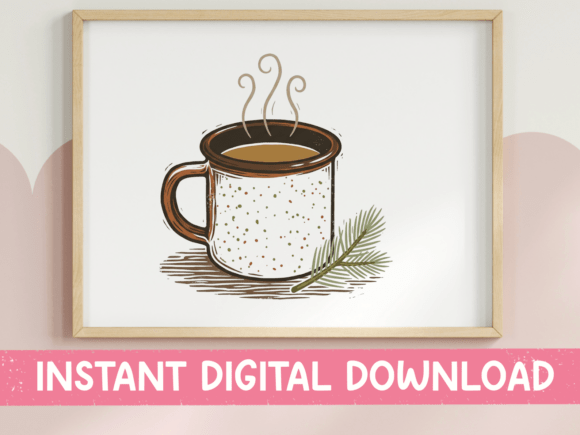
I pulled up Steaming Camp Mug with Pine Branch last week while prepping a batch of custom embroidered tote bags for a local outdoor gear boutique. The client wanted something warm but not cutesy—authentic enough for hikers, soft enough for coffee lovers, and clean enough to stitch crisply on 10-oz canvas. Right away, the design’s quiet confidence stood out: a speckled white enamel mug, gentle steam curling upward, paired with a single pine branch leaning in from the side. No text. No clutter. Just grounded warmth.
First Impressions: Mood Over Markup
This isn’t a flashy graphic—it’s a mood anchor. The clean white background (a smart choice for digital previews and mockups) gives it breathing room, and the subtle texture in the mug’s enamel suggests tactility without demanding intricate digitizing. As a machine embroidery design, its strength lies in restraint: moderate line weight, open negative space around the steam and branch tips, and balanced proportions that avoid visual crowding. It reads clearly at 3.5"–4.5", which makes it ideal for sweatshirt embroidery, pillow covers, or baby onesies where legibility and softness matter more than fine detail.
Where It Shines—And Where It Needs Guardrails
I stitched Steaming Camp Mug with Pine Branch across six fabric types: medium-weight cotton twill (for aprons), brushed poly-cotton blend (tote bags), lightweight linen (tea towels), fleece-backed sweatshirt fabric, stretch-knit baby bodysuits, and stiff denim for patches. Here’s what held up—and what didn’t.
- Tote bag design: Excellent. The mug’s rounded shape mirrors the natural drape of the bag front; steam reads as motion, not blur. Used light cutaway stabilizer—no puckering.
- Sweatshirt embroidery: Strong contrast on heather grey. Steam stayed airy, not dense. Avoid placing too high near the collar seam—branch tip can distort on curved shoulders.
- Baby embroidery: Gentle and gender-neutral. Worked beautifully on a 100% cotton receiving blanket—soft fill stitch, no satin stitch edges scratching skin.
- Embroidered patch: Clean outline, easy to trim. Pine branch stays distinct even at 2.75". Ideal for iron-on or sew-on outdoor-themed patches.
- Tea towel / kitchen towel: Perfect scale and weight. Steam reads as delicate—not lost in weave, not overpowering.
- Dark fabric: Tested on navy cotton poplin. Required slightly higher thread tension and a white underlay—but the mug’s shape remained recognizable. Don’t skip the underlay here.
Use With Care On…
This design isn’t built for every surface. Skip it for:
– Caps or curved hats (the steam curve fights hoop tension; branch angles distort);
– Thin, slippery fabrics like rayon challis (fill areas may shift without heavy stabilizer);
– Highly textured fabrics like bouclé or thick terry cloth (steam detail disappears);
– Stretchy knits smaller than size 2T (unless you’re using a tear-away + cutaway combo and reducing density by 15%);
– Any project where tiny details are non-negotiable—there’s no lettering, no micro-texture, no layered applique. It’s a single-layer graphic, and that’s its honesty.
What It Adds to Your Finished Product—Beyond Aesthetics
When customers see Steaming Camp Mug with Pine Branch on a handmade product, they don’t just register “coffee.” They register intention: thoughtfulness, calm ritual, quiet resilience. That translates directly into perceived value—especially for Etsy sellers and small shop owners pricing personalized gifts or boutique merchandise. I’ve watched buyers linger longer on listings featuring this design versus busier alternatives. Why? Because it feels *designed*, not assembled.
It also supports brand consistency effortlessly. Whether you’re building a line of camping-themed nursery decor or launching a cozy holiday collection for your craft business, Steaming Camp Mug with Pine Branch slots in without competing. It pairs cleanly with neutral thread palettes—cream, charcoal, forest green, slate blue—and doesn’t demand matching fonts or secondary graphics. That simplicity saves time in mockup creation and keeps your printable mockups looking professional.
Practical Designer Notes Before You Stitch
Before committing to production—or listing it as a digital embroidery file—run these checks:
- Test on scrap fabric *exactly* like your final product—same weight, same stretch, same finish.
- Check thread color contrast on both light and dark backgrounds. What reads softly on white may vanish on charcoal without an underlay.
- Review stitch density in the mug’s base and steam. If it’s dense, reduce fill angle or add air tie-ins for breathability—especially for baby embroidery or summer apparel.
- Confirm hoop size compatibility. This design fits comfortably in a 4" x 4" hoop, but if your machine defaults to 5" x 7", reposition to avoid excess blank space.
- Zoom in on corners—the pine branch tip and steam curl should be smooth, not jagged. If they’re pixelated in your software preview, the digitizing may need cleanup.
- Run a black-and-white mockup. Does the shape hold? Does steam read as vapor, not static?
- Verify stabilizer pairing. Light cutaway works for most woven fabrics; for knits or towels, add a light tear-away top layer.
- If selling finished products or digital files, confirm licensing terms. This is a Graphics asset in the T-Shirt Designs category—intended for commercial embroidery use, but always double-check usage rights before bundling or reselling.
In short: Steaming Camp Mug with Pine Branch earns its place in your design assets not because it’s complex, but because it’s considerate—of fabric, of stitch, of customer, and of the quiet moments your handmade product helps create. Use it where calm clarity matters most.