Love Bug SVG: A Designer’s Real-World Embroidery Review
First Impression: Sweet, Simple, and Surprisingly Versatile
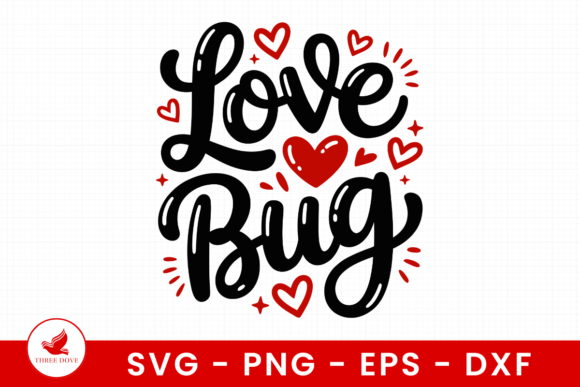
When I opened the Love Bug SVG zip file—just one clean SVG and a 300 DPI PNG with transparency—I wasn’t expecting much beyond a playful Valentine’s motif. But what stood out immediately was its confident simplicity: a rounded bug silhouette with heart-shaped eyes, tiny antennae, and a subtle smile. It doesn’t shout “holiday.” It whispers “thoughtful.” That’s rare in T-Shirt Designs meant for mass appeal—and exactly why this graphic works so well as an embroidery file. It’s not overly detailed, which means it translates cleanly into stitch without collapsing corners or bleeding edges on fabric.
Real Project Test: A Custom Embroidered Tote for a Local Boutique
Last week, I used Love Bug SVG to embroider a set of organic cotton tote bags for a small shop launching a “Love Local” spring collection. We stitched it centered on the front panel, roughly 3.5 inches wide, using a medium-weight cutaway stabilizer and 40-weight polyester thread. The result? Crisp satin-stitched outlines, smooth fill-stitch body, and zero puckering—even on the slightly textured weave. Customers loved how it looked both casual and intentional: not too cutesy for adults, not too generic for kids. That balance is hard-won. Love Bug SVG delivers it without needing tweaks.
Where It Shines (and Where It Needs Care)
Love Bug SVG excels in projects where charm meets clarity:
- Custom apparel: Works beautifully on sweatshirt embroidery and baby embroidery—its soft curves avoid harsh angles that snag on delicate knit fabrics.
- Personalized gifts: As a machine embroidery design, it scales well from 2-inch patches to 5-inch pillow covers without losing legibility.
- Holiday embroidery & nursery decor: Its gentle theme fits Valentine’s Day, baby showers, or even spring-themed tea towels without feeling dated or seasonal-only.
- Craft business & Etsy seller use: The clean lines and minimal detail mean faster stitch times and fewer thread breaks—key for volume production.
But here’s where practical judgment kicks in: Love Bug SVG isn’t ideal for every surface. On curved caps or structured hats, test first—the rounded shape can distort if hooped too tightly. On thin or stretchy fabric like jersey tees, use tear-away + light cutaway stabilizer to prevent shadowing. And while the PNG gives great contrast for printable mockups, remember: embroidery files don’t render color automatically. You’ll need to choose thread colors deliberately—especially on dark fabric, where fine antennae details could vanish without high-contrast thread.
Design Integrity in the Finished Product
What makes Love Bug SVG feel professional—not just “cute”—is how it holds up after stitching. There’s no dense cluster of tiny fill stitches that trap lint or stiffen fabric. No overlapping satin-stitch zones that create bulk. The spacing between elements (like the gap between eyes and mouth) leaves breathing room for thread movement, so it looks handmade, not machine-perfect. That matters for customer trust: buyers notice when embroidery feels considered, not copied.
I’ve seen similar graphics fall apart on kitchen towels after three washes—stitches loosening at the antennae tips, fill areas fraying. Love Bug SVG avoids those pitfalls by design: moderate stitch density, generous curve radii, and no micro-details smaller than 1.5 mm. That’s not accidental—it’s thoughtful Graphics craftsmanship.
Practical Notes Every Embroidery Designer Should Check
Before adding Love Bug SVG to your next project, run through these real-world checks:
- Test on scrap fabric first—especially if using textured or dark fabric. See how the antennae hold up under tension.
- Review stitch density in your embroidery software. If it’s over 12,000 stitches for a 4-inch version, consider simplifying or adjusting pull compensation.
- Confirm hoop size compatibility. This design fits comfortably in a 4×4 hoop at standard scale—but double-check before digitizing for commercial embroidery.
- Inspect small details like eye highlights or mouth curves. They should be clear in both black-and-white and color mockups.
- Use proper stabilizer—lightweight cutaway for knits, tear-away for stable wovens like tea towels or aprons.
- Verify licensing before selling finished products or digital embroidery files. The listing says “DIGITAL DOWNLOAD ONLY,” but commercial rights aren’t stated—confirm before bundling into craft kits or Etsy listings.
Why It Fits Small Shop Branding So Well
As someone who helps handmade product sellers refine their visual language, I keep coming back to how Love Bug SVG supports brand consistency—not despite its theme, but because of it. It’s warm without being saccharine, modern without being cold, and scalable without losing personality. For a boutique selling embroidered pillow covers or personalized baby embroidery, it adds cohesion across categories. For an Etsy seller building a “whimsical everyday” line, it becomes a recognizable signature—like a quiet logo you don’t need to explain.
And yes—it works on t-shirts. But not just as a standalone T-Shirt Design. Paired with a simple monogram or minimalist text (“Love Local,” “Made With Care”), Love Bug SVG becomes part of a system—not a one-off graphic. That’s where its real value lies for creative entrepreneurs.
A Final Thought Before You Stitch
Love Bug SVG won’t replace complex applique designs or narrative embroidery files. But it does something quietly essential: it reminds us that strong embroidery design isn’t about complexity—it’s about clarity, intention, and respect for the fabric, the machine, and the person who’ll hold the finished product. Whether you’re stitching a holiday gift, prepping craft fair inventory, or building digital design assets for your shop, this is the kind of graphic that earns repeat use—not because it’s flashy, but because it simply works.