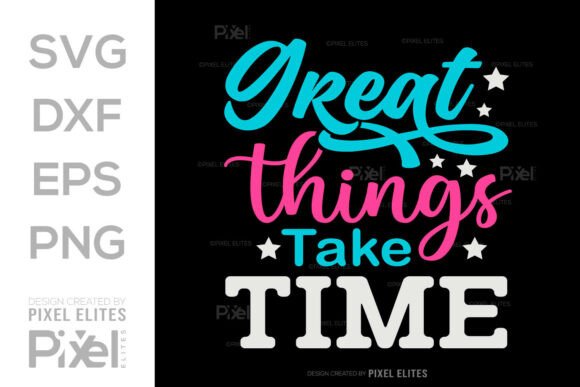
Great Things Take Time SVG Cut File
A Designer’s First Look: Calm, Clear, and Craft-Ready
When I opened Great Things Take Time SVG Cut File, I didn’t see flashy fonts or overwrought flourishes—I saw breathing room. The layout is intentionally unhurried: clean sans-serif lettering with generous spacing between words, subtle curvature in the baseline, and a gentle rhythm that feels handwritten but precise. It’s not shouting—it’s leaning in. That tone matters deeply when translating a digital graphic into a machine embroidery design. For embroidery, every curve, corner, and kerning choice affects stitch flow, thread tension, and how the final piece reads at 4–6 inches wide on a tote bag or baby onesie. This one lands softly—but confidently.
Real Project Test: Embroidering a Linen Tote for a Local Boutique
Last week, I prepped this design for a custom linen tote order—part of a small-batch “slow living” collection for a neighborhood gift shop. Linen’s slubby texture can swallow fine details, so I first tested Great Things Take Time SVG Cut File on scrap fabric with medium-weight cutaway stabilizer. The result? Crisp edges, no puckering, and excellent legibility even at 5.25 inches wide. The letterforms hold their shape without relying on dense fill stitches—most of it stitched cleanly with satin stitch outlines and light fill stitch interiors. That’s a win for breathability, drape, and wearability. Customers noticed the calm confidence of the phrase—and more than one asked, “Is that your original design?” (It wasn’t—but it *felt* intentional, not clip-art.)
Where It Shines—and Where to Pause
This design works beautifully across several embroidery contexts:
- Sweatshirt embroidery: Its open spacing avoids heavy buildup on fleece backs; looks elevated on charcoal or oatmeal heather.
- Embroidered patch: Clean lines translate well to merrowed or heat-seal backing—no tiny serifs to snag.
- Baby embroidery: Gentle scale and rounded forms suit onesies and burp cloths without feeling cutesy or cluttered.
- Holiday or wedding gift: Paired with neutral thread (heather gray, soft sage, warm taupe), it reads as thoughtful—not trendy.
- Tote bag design / apron front: Scales up gracefully without pixelation or distortion thanks to its vector foundation.
But here’s where attention matters:
- Small hoop sizes (under 4”): Avoid shrinking it below ~3.75”. Tight curves in the “G” and “a” may lose definition.
- Stretchy fabric (like jersey tees): Requires tear-away + light cutaway stabilizer combo—don’t skip it. Running stitch underlay helps anchor the satin edges.
- Dark fabric: Light thread colors (ivory, pale gold) read clearly, but avoid very thin off-whites—they’ll mute on black or navy.
- Curved surfaces (caps, curved pillow covers): The horizontal layout stays legible, but test placement first—center-front crown works better than side panels.
What It Adds to Your Handmade Product—Beyond the Stitch
As a designer who reviews hundreds of embroidery files a year, I pay close attention to what a design *contributes* to perceived value—not just technical execution. Great Things Take Time SVG Cut File quietly elevates handmade presentation. It doesn’t scream “sale item”—it invites pause. That makes it ideal for Etsy sellers positioning premium self-care goods, craft fair vendors building brand trust, or boutique owners curating intentional merchandise. Buyers connect with authenticity, not busyness. And because the phrase resonates across ages and occasions—from graduation gifts to retirement tokens—it performs well as evergreen design assets, not seasonal filler.
Practical Notes Every Embroidery Designer Should Check
Before stitching your first client piece—or listing it in your shop—run through these real-world checks:
- Test on scrap fabric first, especially if using textured weaves, knits, or blends.
- Review stitch density in your embroidery software—if it’s over 12,000 stitches, consider simplifying inner fills for lightweight fabrics.
- Confirm hoop size compatibility with your machine’s standard hoops—this design fits comfortably in 5x7”, but verify before hooping.
- Inspect small details like the crossbar on the “t” and tail of the “y”—they’re clear in the SVG, but stitch rendering varies by machine.
- Try black-and-white mockups to assess contrast on light vs. dark backgrounds—some thread brands dull lighter tones.
- Use proper stabilizer: medium cutaway for stable wovens, lightweight tear-away + topping for knits.
- Check licensing terms before selling finished items or bundling the file in digital product packs—this is essential for Etsy sellers and craft business owners.
Final Thought: A Quiet Design With Real Weight
In a market flooded with bold slogans and aggressive positivity, Great Things Take Time SVG Cut File stands out by doing less—and meaning more. It’s not built for viral moments. It’s built for quiet confidence: the kind you feel when handing someone a hand-stitched tea towel before their first day at a new job, or embroidering a nursery pillow for a friend who’s waited years for this moment. As a T-Shirt Designs asset or Graphics file, it bridges motivation and mindfulness without cliché. For embroidery designers, small shop owners, and creative entrepreneurs, that balance isn’t just practical—it’s professional. It says you understand your customer’s values, not just their cart.